
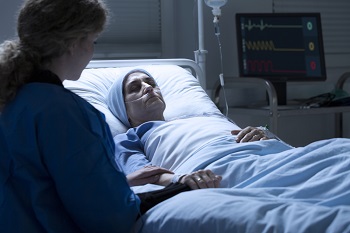
Darya Shipilova was 28 years old. She was a lab assistant at the Irkutsk Anti-Plague Institute of Siberia and the Far East, a facility founded in 1934 that handles plague, cholera and anthrax samples.
On September 29, she was admitted to a hospital in Shelekhov with severe pneumonia and put on a ventilator. Before she died in the early hours of October 2, she reportedly told medical staff something Moscow has spent the past week trying to take back. She said she had broken a test tube containing live bacteria at work.
Now Russian media are reporting a second death.
According to the reports, a second person died at a district hospital in the Irkutsk region, where the bio lab Shipilova worked at is located. The reports give no name and no age, and the government hasn't acknowledged it. The death surfaced on October 6, and the Kremlin would like everyone to stop asking about it.
Washington keeps asking.
Speaking to reporters in Reykjavik, Iceland, Secretary of State Marco Rubio said it is "incumbent upon Russia to obviously share more information with the world." It was the strongest language from the administration so far. He was blunt about the stakes: "If something like that gets out, it could quickly spread."
The State Department has been in contact with the Russian government since Friday. On October 6, it formally asked Moscow for more information.
President Trump went straight to the top, and he has a call scheduled with Vladimir Putin. "We're looking at it very strongly, we just heard about it," Trump told reporters. "They call it pneumonia, and pneumonia, you know, years ago you could treat pneumonia easier, and the microbes and the germs have gotten stronger disproportionately. But we'll help them."
"I hate to see them having it," he said on the White House South Lawn. "It's a rough disease. Anybody that has that kind of a problem, we're always willing to help."
So the American offer is simple: tell us what happened, and we'll help. Moscow has responded to the request yet.
Rospotrebnadzor, Russia's health watchdog, says Shipilova died of "pneumonia of unknown origin." It says the institute had "no accidents involving pathogenic micro-organisms," and that no microorganisms linked to her work were found in her body. On Tuesday, Russia told the World Health Organization it has zero plague cases. The WHO rated the risk as low.
The agency tested 60% of her close contacts and found two cases of Covid-19 and two of rhinovirus. "No other infectious disease pathogens were detected among the contacts," it said.
So the official story is plain pneumonia, cause unknown, in a 28-year-old plague researcher who said she broke a vial of live bacteria.
Pneumonic plague is the one form of plague that spreads from person to person, through droplets in the air. Without antibiotics it is almost always fatal, and treatment has to start within about a day of the first symptoms. Keep that in mind while you look at what Russia did about its "pneumonia":
- Nearly 200 people put under medical observation in the Shelekhov municipal district.
- More than 60 institute employees sealed inside the building starting Friday.
- Six hospitals quarantined: three city clinical hospitals, the Ivano-Matreninsky children's hospital, the city maternity hospital and the Central District Hospital in Shelekhov. The institute's own inpatient facility was closed as well.
- FSB escorts for the ambulances carrying her contacts.
- About 2,000 workers at the Irkutsk Aluminium Smelter ordered into masks.
- Classes canceled at the Irkutsk branch of Moscow State Technical University.
That's a lot of safety measures for a chest cold.
The neighbors noticed. Mongolia, Kyrgyzstan and Uzbekistan tightened health controls on their borders. Officials in Baikalsk, a town on Lake Baikal, warned residents not to travel to Shelekhov, citing "unofficial information."
Inside Russia, coverage of the story keeps disappearing. REN TV deleted five articles about the plague, and reports from Channel 5 and Kommersant were taken down too. Alexei Tsydenov, who heads the neighboring Buryatia region, first confirmed a plague death and then changed it to "possibly."
Kremlin spokesman Dmitry Peskov told the public to "rely on official statements from Rospotrebnadzor rather than listen to various rumors," and added: "Rospotrebnadzor provides comprehensive information." Irkutsk Governor Igor Kobzev says "the situation remains under our control and under the control of experts." Shelekhov Mayor Maksim Modin has said little beyond confirming the quarantine. Asked about further action, the regional branch of the health watchdog said "no such decisions have been made at this time."
Russia has a track record that explains the doubts.
In 1979, anthrax escaped from a military facility in Sverdlovsk and killed at least 68 people. Moscow blamed tainted meat. It took 13 years before Boris Yeltsin admitted the truth in 1992.
Last year, the State Department's arms control compliance report found that Russia still runs an offensive biological weapons program.
Then there was Wuhan, which had a bio lab, a mysterious illness and a Chinese government saying nothing was unusual. Within about three years, the lab leak theory went from "dangerous misinformation" to "yeah, probably what happened."
This time, the president of the United States is asking the questions. The Secretary of State is pressing Moscow in public, the U.S. Embassy in Russia is involved, and the CDC is watching. The CDC says that "at this time, there is no indication of a broader threat to the United States," and that it and its interagency partners "are prepared and will continue to monitor the situation closely."