
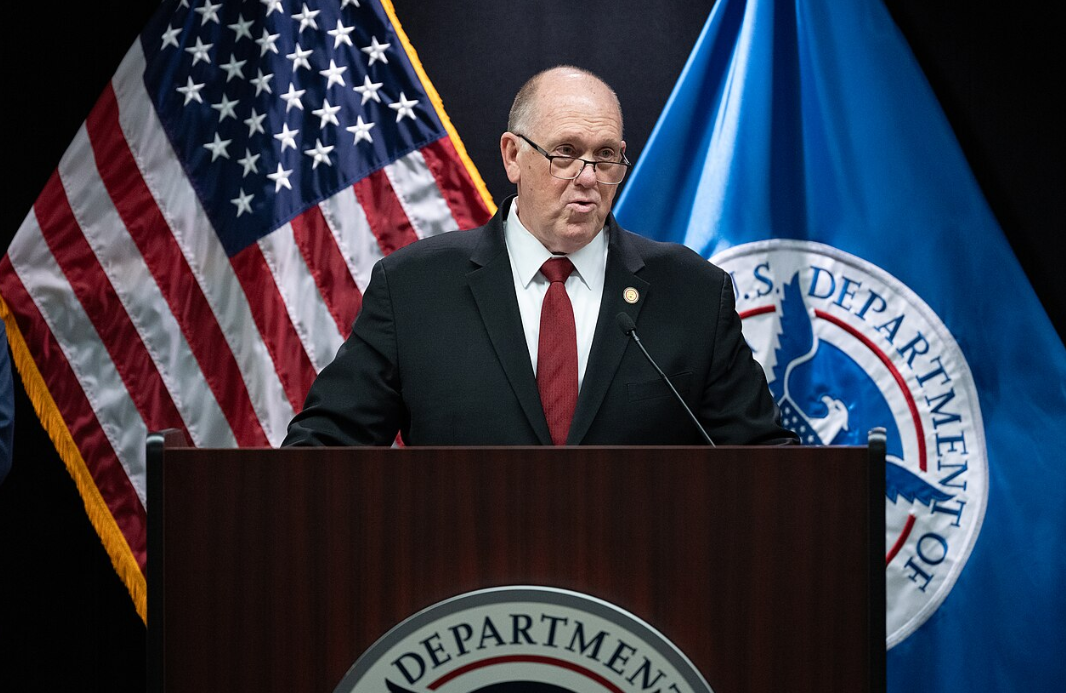
Tom Homan has been doing immigration enforcement since 1984. Margaret Brennan has been doing immigration commentary from a desk. On Sunday's "Face the Nation" on CBS, Brennan tried to corner Trump's Border Czar over recent ICE vehicle stops that turned violent — and ended up defending the people who tried to kill federal agents with their cars.
Homan wasn't having it.
The exchange centered on a series of incidents — shootings in Houston and Maine, and a man struck by a tractor-trailer in Florida — that followed ICE enforcement stops in recent weeks. Brennan's angle was predictable: the stops were too aggressive, the oversight was insufficient, the optics were bad.
Homan cut straight through it. "They'd be alive today if they simply complied with a vehicle stopped by federal law enforcement," he said. Not complicated. Not spin. Just the basic math of what happens when you try to run over a federal officer.
Brennan pushed back on the Houston incident specifically. "In Houston, it was an unmarked car," she said, suggesting that the lack of markings somehow justified the response of the suspects. She added that "there weren't body cameras, it is hard to substantiate some of what you are saying."
That gave Homan the opening to talk about something the administration has actually been doing — funding body cameras for ICE agents. The proposal includes $120 million for ICE body camera deployment, with $20 million already allocated in April. "I think body cameras let the American people know what that officer sees," Homan said.
So the administration is actively pushing for more transparency on ICE enforcement — and the CBS host is arguing there isn't enough transparency. Those two positions aren't in conflict. But Brennan framed it as though Homan was dodging accountability rather than funding it.
Homan also addressed the broader climate around enforcement. "My concern is I think a lot of the rhetoric that you see every day, especially in sanctuary cities," he said — pointing to the political environment that tells people they don't have to comply with federal law enforcement. When elected officials spend years telling communities that ICE has no authority and cooperation is optional, some people believe them. Some of those people make fatal decisions.
"I've done this since 1984," Homan reminded Brennan. Forty-two years of federal law enforcement, from street-level operations to running the agency. That's not a credential Brennan can match with a follow-up question about unmarked vehicles.
The interview also touched on the discovery of 250,000 non-citizens identified across four states — California, Pennsylvania, New Jersey, and Nevada — and DHS Secretary Markwayne Mullin's broader enforcement posture. But the clip that went viral wasn't the policy discussion. It was the moment a network anchor looked into a camera and implied that people who attempt vehicular assault on federal agents are somehow the sympathetic party in the story.
Sanctuary city policies in places like New York City, Minnesota, and elsewhere have spent years building the legal and rhetorical framework that ICE stops are illegitimate. Brennan's line of questioning didn't challenge that framework — it operated entirely within it. The underlying assumption was that the enforcement action needed justification, not the violent response to it.
Homan answered the questions Brennan asked. He also answered the one she didn't: whether law enforcement officers have the right to stop a vehicle and expect the occupants not to try to kill them. In 1984, that wasn't a controversial position. In 2026, it apparently requires a Sunday morning debate on CBS.