
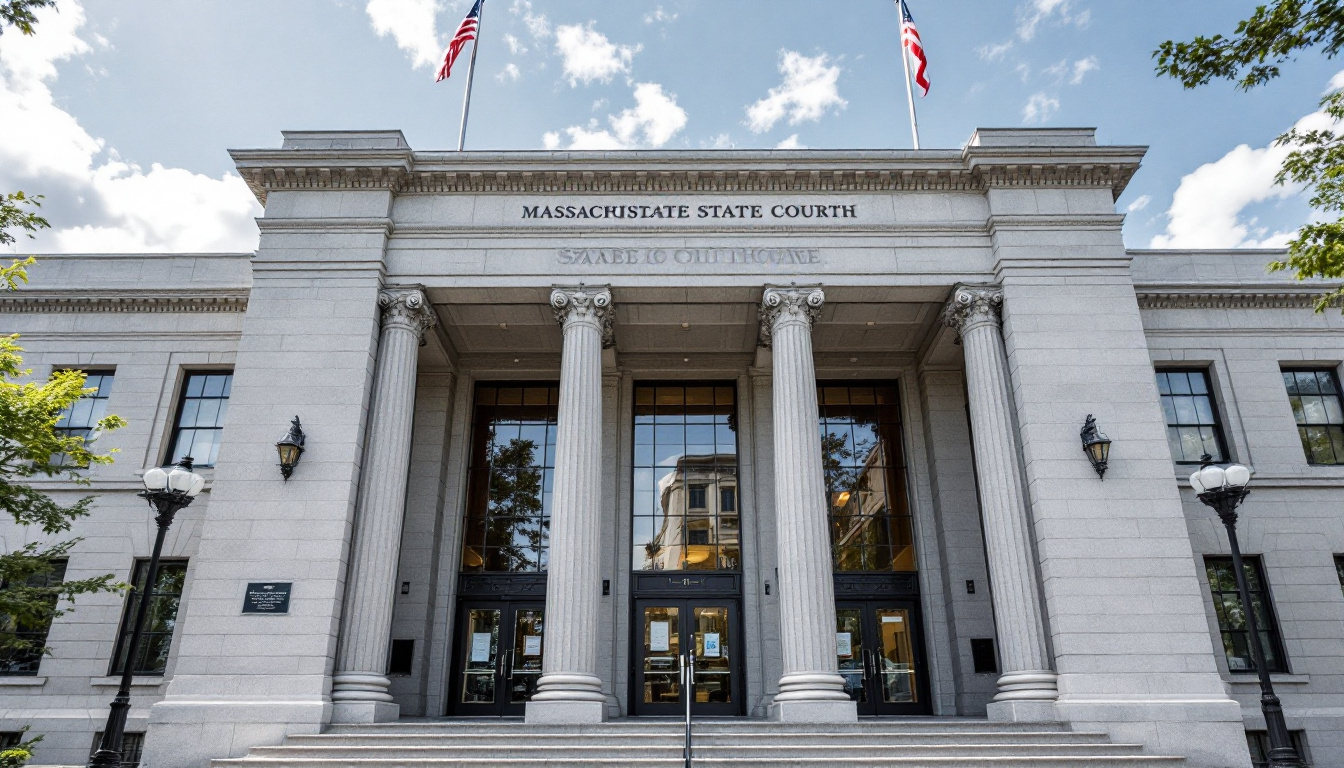
Fifteen people got arrested in Massachusetts for stealing $1.4 million in public benefits — SNAP, MassHealth, disability, unemployment. Eleven of them were illegal immigrants. That's not a rounding error. That's 73 percent of the defendants in a single fraud sweep, all people who weren't supposed to be in the country in the first place.
And the charges didn't stop at benefit fraud. Identity theft. Tax fraud. Voting fraud.
Assistant Attorney General Colin M. McDonald, who heads the DOJ's National Fraud Enforcement Division, laid it out plainly. "These cases highlight a broader, deeply troubling pattern: the exploitation of America's safety-net by illegal aliens," McDonald said. That's not a cable news talking point. That's the federal government's chief fraud prosecutor describing what his own team just uncovered in one of the bluest states in the country.
The investigation, reported by Liberty Nation's Kelli Ballard, paints a picture that goes well beyond a few bad actors gaming the welfare system. Among the defendants is Carlos Bedolla Sanchez, a 42-year-old Mexican national caught up in the sweep. The charges span multiple categories of fraud — stolen Social Security numbers used to claim benefits, fabricated identification documents, and the kind of systematic exploitation that doesn't happen by accident.
US Attorney Nicholas J. Ganjei didn't mince words about the identity theft component. "The theft of identity for financial gain is bad enough, but stealing a person's identity to make fraudulent identification documents raises tremendous public safety concerns," Ganjei said. When someone steals your Social Security number to collect unemployment checks, that's a financial crime. When they use it to build a fake identity portfolio, that's a security problem.
Inspector General Anthony P. D'Esposito of the US Department of Labor put an even finer point on it. "Stealing someone's identity to rip off unemployment benefits isn't just breaking the law," D'Esposito said. He's right. It's a two-for-one — the victim loses control of their identity, and the taxpayer funds the payout.
The timing here matters. The DOJ created the Benefit & Voter Fraud Team on March 25 and stood up the National Fraud Enforcement Division on April 7. These aren't legacy investigations that happened to wrap up now. These are the early results of agencies that were specifically built to find exactly this kind of fraud. The implication is straightforward: the fraud was always there. Nobody was looking.
Massachusetts isn't an outlier, either. The article documents 119 illegal aliens prosecuted in Mississippi back in 2019, and similar cases stretching across New Mexico, Pennsylvania, Louisiana, Florida, Alabama, and New Jersey. In one Florida case alone, the IRS was owed $1,214,508. This is a national pattern with a Massachusetts zip code on the latest batch.
DHS Secretary Markwayne Mullin connected the enforcement side. Those convicted, he said, "will be swiftly removed from our country so they can never defraud American taxpayers again." That's the policy promise. Whether the immigration courts and deportation pipeline can deliver on it at scale is a separate question — but at least the arrests are happening.
The standard Democratic response to voter fraud concerns has been consistent for years: it doesn't happen, and anyone who says otherwise is undermining democracy. That position requires ignoring what just happened in Massachusetts, where voting fraud appeared alongside benefit fraud in the same set of indictments, committed by the same defendants who weren't legally present in the United States.
The SAVE Act — requiring proof of citizenship to register to vote — is working its way through Congress right now. Its opponents call it a solution in search of a problem. Eleven out of fifteen defendants in a single Massachusetts fraud sweep were illegal immigrants, and voting fraud was on the charge sheet.
That's not a solution in search of a problem. That's a problem in search of a solution that already exists.