
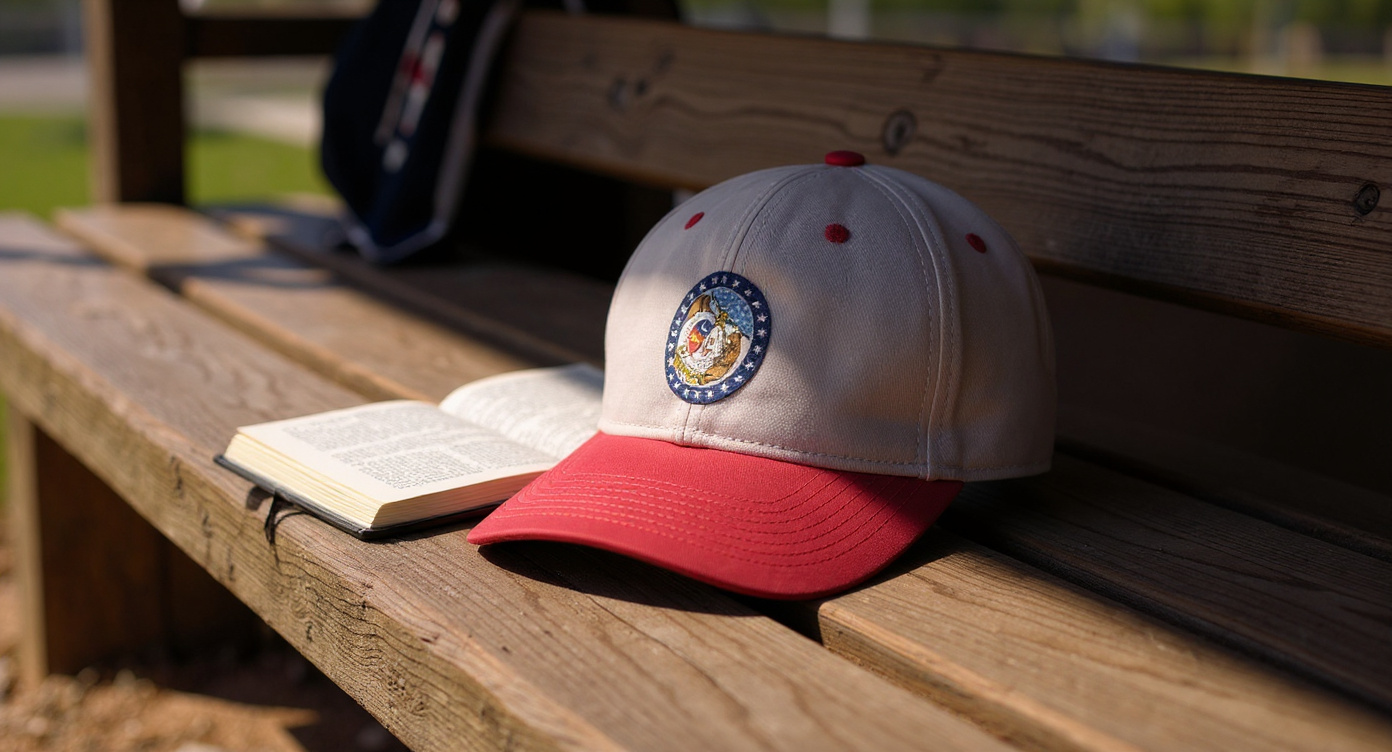
MLB Commissioner Robert Manfred put it in writing this week: San Francisco Giants pitcher Landen Roupp and his teammates who inscribed Genesis 9 on their caps during Pride Night were "neither fined nor disciplined, nor will they ever be." Those last five words — "nor will they ever be" — landed in a letter to Senator Josh Hawley (R-Mo.) like a formal instrument of surrender.
Two weeks ago, the league was singing a different tune and hinting at consequences. Now they're promising, on the record, that there won't be any.
Here's what happened. During the Giants' Pride Night game, Roupp added a reference to Genesis 9 on his cap, right next to the rainbow Pride logo the league had placed there. Genesis 9, for those who skipped Sunday school, is the passage where God establishes the rainbow as a covenant. Roupp wasn't subtle about his reasoning, either. "The rainbow is a symbol of God's covenant with us, and we as believers stand firm in that," he told reporters. "There's no hate at all. It's just what I stand for and what I stand in, I believe in God."
The Athletic ran a piece criticizing the players. MLB issued a verbal threat to the players warning them to never do that again or else. The message was clear: we put the rainbow on your hat, and you don't get to talk back to it with Scripture.
Then the backlash arrived. Senator Hawley sent a pointed letter to Manfred questioning whether the league was punishing players for their religious beliefs. Assistant Attorney General Dhillon weighed in too, noting that "the Civil Rights Act prohibits MLB and its franchises from unreasonably burdening the rights of players with religious objections to serving as the League's vehicle for pro-Pride messages." When the federal government starts citing Title VII, corporations tend to find religion — or at least find a lawyer who tells them to.
Manfred's response to Hawley tried to thread the needle. He insisted the league "was not discriminating or chastising those players based on their religious beliefs" but rather "enforcing a long-standing, collectively bargained rule that keeps uniforms clean and avoids controversy." He also acknowledged that "some players or other on-field personnel have not been comfortable wearing the pride emblem on their uniform based on their religious beliefs." So the league knew players had religious objections, put the emblem on anyway, and then warned them when they responded with Scripture. Interesting sequence.
The uniform policy itself tells the story. MLB runs 12 league-sanctioned uniform customization events per year — Mother's Day, Father's Day, Independence Day, September 11, Jackie Robinson Day, and others. Pride Night was grandfathered into league policy in 2023. Players are expected to wear whatever the league puts on their caps. The difference is that nobody gets a warning for adding a cross on September 11 or a flag pin on Independence Day. The verbal warning came only when players responded to a Pride emblem with a Bible verse.
That's the part Manfred's letter doesn't quite address. If the rule is about keeping uniforms clean, it applies to all 12 events equally. If the enforcement only shows up at one particular event, the rule isn't the issue.
The swift about-face from the league's initial posture is worth noting. What changed wasn't the policy. What changed was that players didn't apologize, a U.S. Senator asked uncomfortable legal questions, and the Department of Justice made it clear the Civil Rights Act has opinions about compelled speech.
Manfred's letter is now on the record. "Nor will they ever be." That's not a concession made from a position of strength. That's a corporation realizing it picked a fight it couldn't win and locking in the retreat before it gets worse.
Funny how fast "long-standing rules" become flexible when someone with subpoena power starts reading them.