
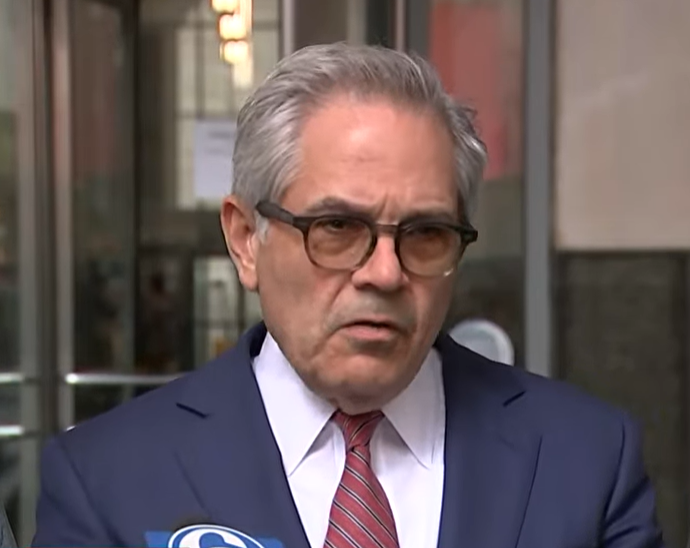
U.S. District Judge Paul Diamond Jr. didn't just rule against Philadelphia District Attorney Larry Krasner. He referred him to the U.S. Attorney's Office for potential federal prosecution, writing that he had "reluctantly concluded that Philadelphia's highest law enforcement official and one of his top assistants may have violated the law."
The city's top prosecutor may now need one of his own.
Krasner, the Democratic DA who rode a wave of Soros-funded progressive prosecutor campaigns into office in 2018, was caught up in a post-conviction case involving a second-degree murder conviction. Judge Diamond found evidence of obstruction of justice and potential criminal conspiracy — not from some street-level defendant, but from the man running Philadelphia's entire criminal justice apparatus.
The specifics are damning. Judge Diamond determined that Krasner's office gave orders to "protect the office" and that deputy Matthew Stiegler attempted to persuade four prosecutors to "urge the court to accept a false narrative." That's not a policy disagreement. That's a district attorney allegedly instructing his own staff to lie to a federal judge.
Diamond disqualified both Krasner and Stiegler from the case entirely.
Krasner, for his part, issued a statement dripping with the kind of procedural outrage that defense attorneys usually reserve for their clients: "I respectfully and vigorously disagree with the court's findings of fact and conclusions of law. I look forward to appealing to the higher court as soon as the law allows. This remains a pending matter."
Sounds familiar. That's roughly what every defendant says after getting caught. The difference is most defendants didn't spend years telling Philadelphia residents that the real problem with crime was too much prosecution.
Krasner won reelection just last year, running on the same platform he always has — that the justice system is too harsh, that incarceration doesn't work, that we need "reform." Philadelphia's murder rate and his office's conviction rate during his tenure tell a different story about how that philosophy works in practice. But the voters who kept him in office weren't the ones living with the consequences in the neighborhoods his policies abandoned.
The progressive prosecutor movement has always operated on a simple premise: the system is broken because it punishes too many people. Krasner was the model. The prototype. George Soros spent millions putting DAs like him into office across the country, and Krasner was the one they pointed to as proof of concept.
Now the proof of concept is being referred for federal prosecution for allegedly obstructing justice and conspiring to feed a false narrative to a court. The man who built a career arguing that the criminal justice system was too aggressive is about to find out exactly how aggressive it can be — from the defendant's chair.