
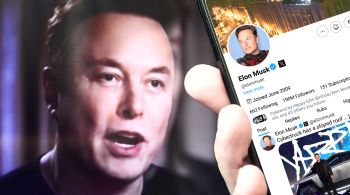
On February 22, 2025 — the same day Elon Musk announced that all federal employees would be required to report their productivity — an FBI agent in the bureau's CR-15 public corruption squad fired off an email to a colleague. The subject: opening a criminal investigation into Musk. The crime: an email policy at the Office of Personnel Management.
Not espionage. Not fraud. An email.
The internal message, first obtained by Senate Judiciary Committee Chairman Chuck Grassley as a legally protected whistleblower disclosure, lays out the agent's case in remarkably enthusiastic terms. "I would like to recommend the opening of a criminal 58 matter on the person(s) at OPM" who "encouraged, abetted, aided, etc. thousands if not tens of thousands of government employees to violate government wide security policy," the agent wrote. The unnamed agent alleged Musk was the man pulling the strings — and that his use of his own platform made it worse.
The logic, such as it was, went like this: Musk, serving as a Special Government Employee leading the Department of Government Efficiency, used X — the platform he owns — to communicate information the agent deemed official government business. Because Musk is "monetized as a majority owner of Twitter," the agent argued, he "likely generated income for himself" by posting about government operations. The agent claimed "this likely violates 18 USC 208 and the terms of his SGE agreement."
Then came the kicker. "His use of twitter in this and other instances is conceptually similar to Hillary Clinton's misuse of a private email server," the agent wrote. A comparison that must have seemed devastating on paper. In practice, it mostly reminded everyone that Clinton's actual private email server — the one that handled classified material — resulted in exactly zero criminal charges. But sure, Musk tweeting about productivity reports is "conceptually similar."
The agent closed with what reads less like a professional recommendation and more like a volunteer form: "Happy to write the case opening and find a prosecutor (or at least try). And no, I'm not kidding."
No kidding indeed. An FBI agent stationed in the public corruption unit — the squad specifically tasked with investigating crooked politicians and government fraud — decided the most pressing corruption threat in the federal government was a uber-successful consultant telling life-long bureaucrats to show their work. Not the $200 billion in estimated annual waste DOGE was created to address. The guy trying to cut it.
The FBI confirmed no investigation into Musk was ever opened. The agent who sent the email no longer works at the bureau. And in October 2025, FBI Director Kash Patel dismantled the CR-15 public corruption squad entirely. An FBI spokesperson said Director Patel "has made it a top priority to expose and eliminate the deep-rooted corruption that took hold over decades at the FBI" and that "the era of politically motivated investigations and targeting opponents is over."
The timing of the original email tells you everything the text doesn't. February 22, 2025 — weeks into the new administration. DOGE hadn't even finished its initial audit. Musk's team was still mapping which agencies were burning cash fastest. And an FBI agent's first instinct wasn't to help find the waste. It was to find a prosecutor willing to charge the man looking for it.
That instinct — reach for the badge before the budget spreadsheet — is the whole problem DOGE was designed to solve. Federal employees who view any disruption to the existing order as a criminal act aren't protecting the public. They're protecting the payroll.
The Clinton comparison was meant to be the smoking gun. It turned out to be the confession.