
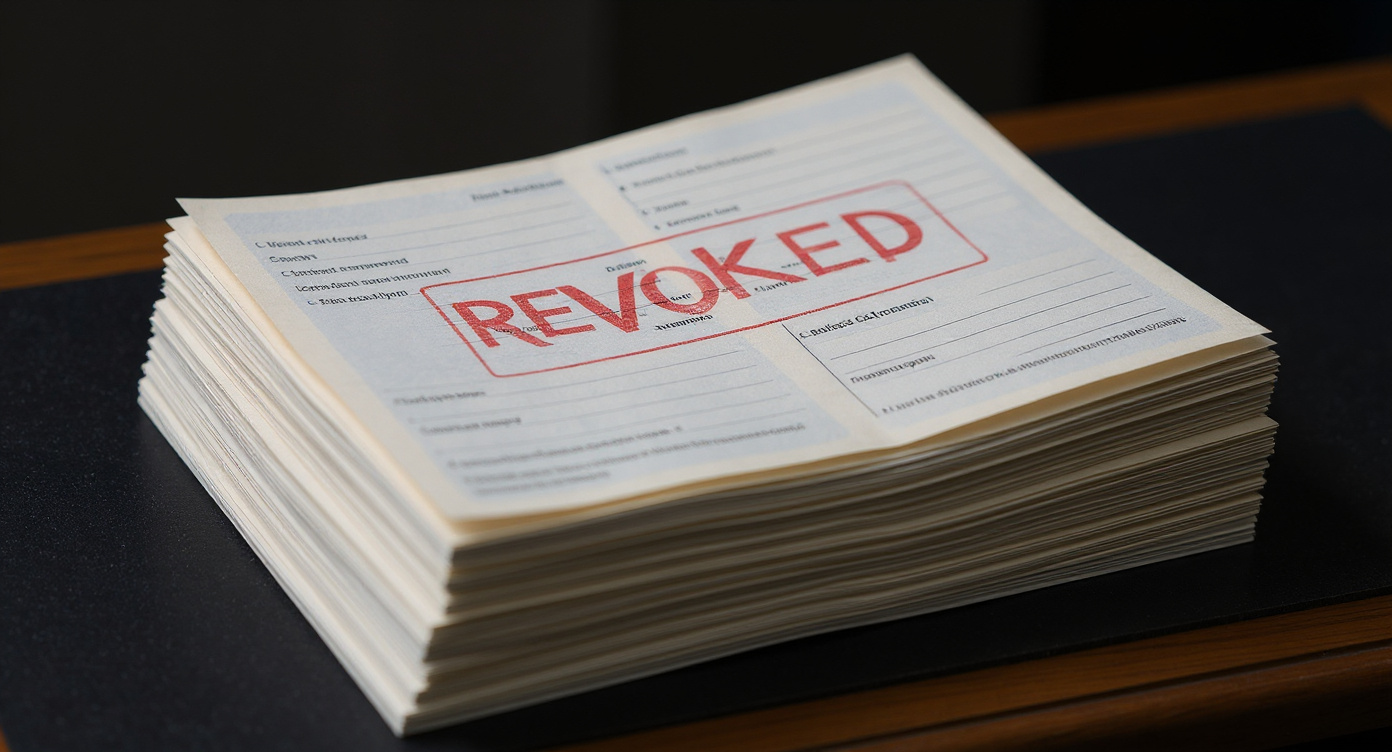
Up to 200,000 foreigners entered the United States on B1 business and B2 tourist visas issued between 2016 and 2026. They came for vacation, or meetings, or whatever reason tourists come. Then they filed asylum claims — converting a short-term visit into a permanent stay with one well-timed piece of paperwork.
The State Department just noticed.
Secretary of State Marco Rubio's State Department is coordinating with the Department of Homeland Security to revoke those visas in what would be the largest mass visa revocation in American history. State Department spokesman Tommy Pigott confirmed the action, stating, "We are coordinating with DHS to identify and revoke the nonimmigrant visas of foreigners who have come to the United States claiming to be short-term visitors, but then file for asylum to stay here permanently."
That's a direct quote from an official spokesman, not a leak, not a rumor. The administration isn't hiding the ball on this one.
Deputy Secretary of State Christopher Landau put it more bluntly: "People in the US and all over the world are fed up with bogus asylum claims. Asylum isn't supposed to be a loophole to circumvent immigration law." Which is the kind of sentence that shouldn't need to be said out loud by a senior government official, and yet here we are — because for years, that loophole was treated as a feature, not a bug.
The mechanics are straightforward. You apply for a tourist visa. You get approved. You fly in. You immediately file an asylum claim, which jams you into a years-long backlog and functionally guarantees you stay in the country while your case crawls through immigration court. By the time a judge gets to your file, you've been here long enough to have a lease, a job, maybe a kid in school. The system wasn't broken. It was being played.
The revocations themselves won't trigger immediate deportation — at least not automatically. Most of the affected individuals with pending asylum cases would be recategorized, losing their status as business or tourist visitors. But the signal is unmistakable: the era of using a visitor visa as an on-ramp to permanent residency is closing.
This isn't the administration's first pass at visa enforcement, either. Over the past 18 months, roughly 175,000 visas have already been revoked — for criminal activity, national security concerns, or other violations. This new batch of 200,000 would dwarf that number in a single action.
Immigration attorneys and left-leaning legal groups are already teeing up challenges, which is as predictable as sunrise. The action is expected to be announced formally in the coming weeks, rolled out on a "rolling basis" in coordination with DHS. Courts will get involved. Motions will be filed. Press conferences will be held.
But the core question is simple enough that even a federal judge should be able to follow it: Did you apply for a tourist visa? Did you then claim asylum? Because those are two fundamentally different things, and pretending otherwise for a decade didn't make them the same.
The asylum system was designed for people fleeing genuine persecution — not for people who figured out that a round-trip ticket and a well-timed filing could turn a two-week vacation into a permanent address. Two hundred thousand visa holders are about to learn the difference.