
For 91 years, the heads of federal agencies like the FTC, the CFPB, and the EEOC operated under a simple arrangement: the president could appoint them, but he couldn't fire them unless they committed specific offenses. The president of the United States — the one person voters actually elected to run the executive branch — needed permission from a 1935 court ruling to manage his own employees.
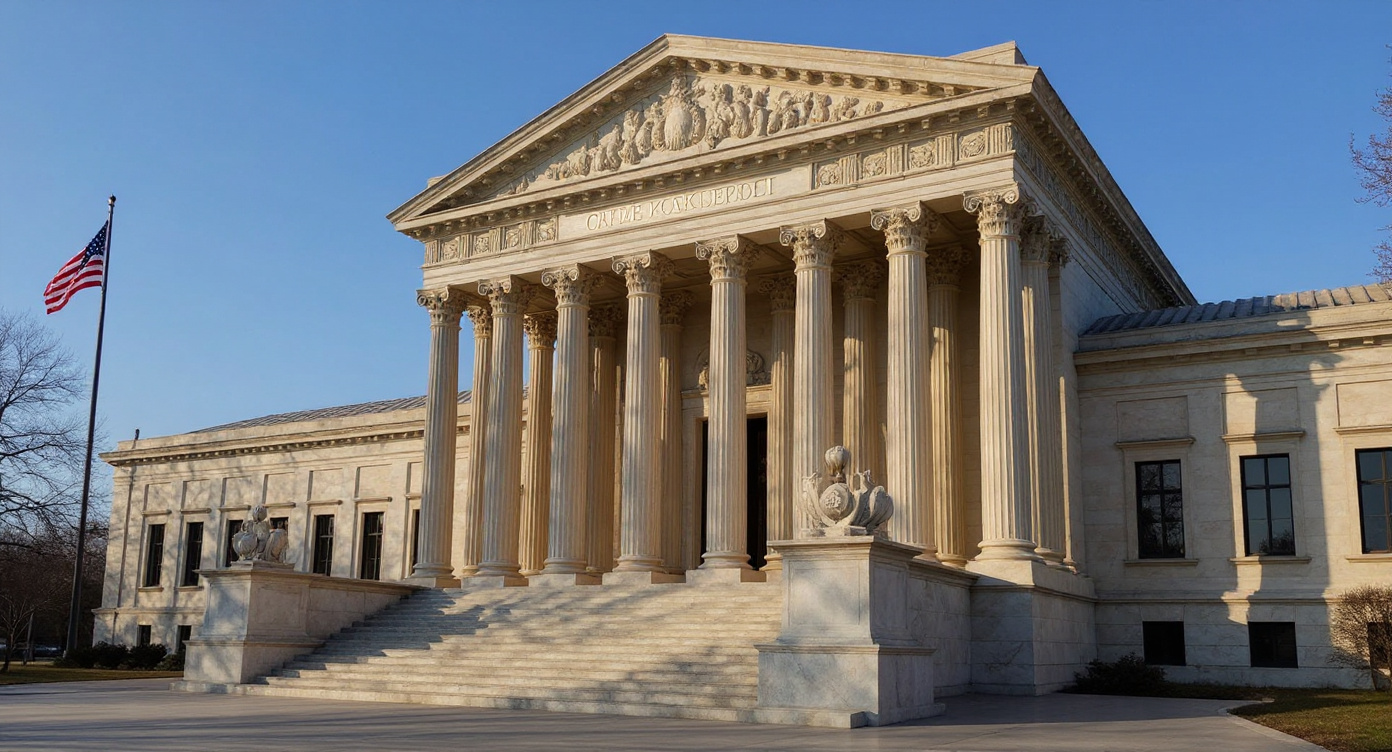
That arrangement ended on June 29. The Supreme Court voted 6-3 to overturn Humphrey's Executor v. United States and confirmed that the president has full constitutional authority to remove the heads of independent agencies.
The case, Trump v. Slaughter, arose after President Trump fired FTC Commissioner Rebecca Kelly Slaughter in March 2025 over policy disagreements. Under the old precedent, that would have been illegal — you could only remove commissioners for "inefficiency, neglect of duty, or malfeasance in office." Disagreeing with the president on how to do your job didn't count. The agency head could simply say "no thanks" to the elected president's agenda and keep cashing the check.
Chief Justice John Roberts, writing for the majority, dismantled the logic that had protected this arrangement since FDR's presidency. The 1935 ruling had drawn a distinction between agencies performing "quasi-legislative" or "quasi-judicial" functions and those exercising pure executive power. Roberts wrote that the distinction "never made sense" and had become "increasingly untenable" as agencies like the FTC expanded far beyond their original scope. The FTC alone now enforces approximately 80 statutes.
"Although it is up to the Senate to decide whether to confirm those" appointees, Roberts wrote, "neither Congress nor the courts may saddle him with those with whom he cannot work." And in case anyone wondered whether some fragment of the old precedent survived: "If anything more is left of Humphrey's, the Court overrules it."
Justice Sonia Sotomayor, joined by Justices Elena Kagan and Ketanji Brown Jackson, dissented. Sotomayor called the decision "grievously wrong" and wrote that "the Court gives the President a power unknown even to the English Crown" — "elevating him above his once-coequal branches." She warned that "the result is a President who emerges with far greater power than ever before."
That's one way to frame it. Another way: the result is a president who can actually do what voters hired him to do.
The FTC is a five-member commission, historically limited to no more than three members from one party. That structural check remains. What doesn't remain is the ability of holdover commissioners to run a shadow policy agenda that directly contradicts the sitting president. Slaughter herself acknowledged the stakes in an NPR interview, saying "independence allows the decision-making...to be on the merits, about the facts, and about protecting the interests of the American people." The counterargument writes itself: voters already decided what protects the interests of the American people. That's what the election was for.
The ruling's reach extends well beyond the FTC. The Consumer Financial Protection Bureau, the Equal Employment Opportunity Commission, the Consumer Product Safety Commission, the Merit Systems Protection Board — roughly two dozen multimember agencies now fall under direct presidential authority. The Federal Reserve, notably, survived in a separate 5-4 decision.
The practical impact is straightforward. For nine decades, a president could win an election by 10 million votes and still find his own executive branch populated by officials actively working against his agenda, shielded by a Depression-era court ruling that treated bureaucratic independence as a constitutional principle. That shield required voters to accept that unelected commissioners knew better than the person they actually chose.
Six justices just decided the Constitution doesn't say that. Three disagreed. The vote was the same margin that decided the election's consequences should actually mean something.