
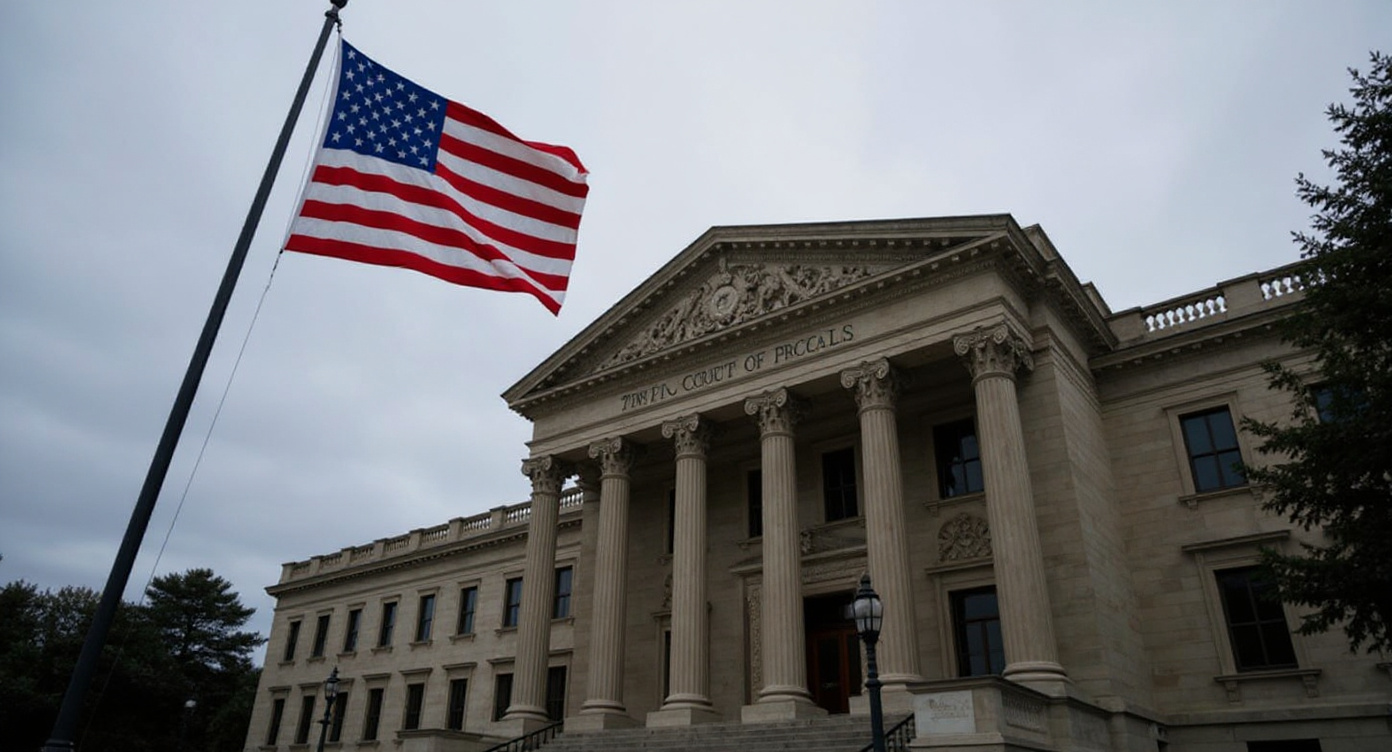
A 2-1 ruling out of the Ninth Circuit on November 10 vacated a lower court's order barring ICE agents in Portland, Oregon from using tear gas, pepper balls, and flashbang grenades against crowds outside a federal facility. The case is Dickinson v. Trump. The plaintiffs were the ACLU of Oregon and five individuals. The restriction they wanted kept in place would have required agents to prove "an imminent threat of physical harm" before deploying any nonlethal crowd-control measure.
The Ninth Circuit said no.
Circuit Judge Kenneth Lee, writing for the majority alongside Circuit Judge Eric Tung, didn't leave much room for interpretation. "The First Amendment cannot be a sword to justify vandalism of federal buildings, criminal trespass of government property, or obstruction of law enforcement," Lee wrote. That sentence does a lot of heavy lifting. It reframes the entire Portland saga — years of nightly chaos dressed up as protest — as what it actually was: criminal activity that federal agents had every right to shut down.
The majority opinion went further. Federal officers "may use nonlethal force to clear crowds and restore order — they need not wait until they face 'an imminent threat of physical harm,'" the court held. The original district court order had also demanded larger identifying markings on officer uniforms, a requirement the Ninth Circuit tossed along with the rest. The panel vacated the district court's provisional class certification entirely, finding insufficient evidence to support the retaliation policy claim at the heart of the case.
"Courts cannot be the couture of the executive branch," the majority wrote. Translation for the ACLU lawyers who brought this case: a federal judge doesn't get to design operational rules for ICE agents the way a tailor fits a suit.
The ACLU's legal theory rested on the idea that crowd-control tactics were themselves retaliatory — that dispersing people gathered outside a federal building was punishment for exercising First Amendment rights. The court's response collapsed that argument with one observation: the First Amendment protects speech, not vandalism, not trespass, not obstruction. The plaintiffs needed the court to treat those categories as interchangeable. It refused.
The Department of Homeland Security has spent years operating under a patchwork of injunctions from Obama-era appointees who treated federal law enforcement in Portland like an occupying army that needed judicial supervision. This ruling strips away one of the most aggressive of those restraints. When the Ninth Circuit — a court whose liberal reputation is so established it's practically a brand — tells a lower court that it overstepped on behalf of the ACLU, the legal ground underneath the open-borders enforcement model has shifted in a way that doesn't shift back easily.
One dissenting judge. Two in the majority. The most liberal appellate court in the country ruled that ICE agents can do their jobs without asking a federal judge for permission first.
The vote was 2-1.