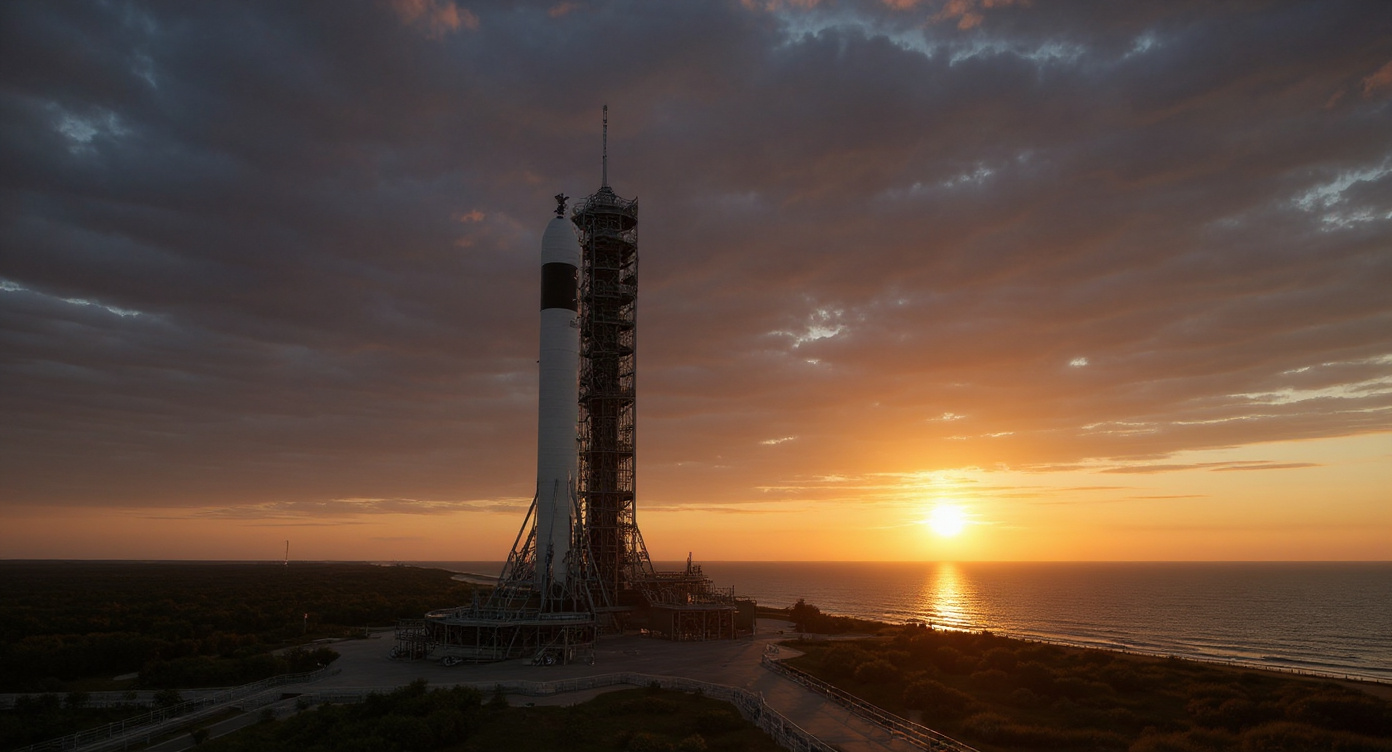
One hundred billion dollars. That's the price tag Elon Musk just put on Louisiana's Gulf Coast. SpaceX announced a massive new launch facility in Vermilion Parish — dubbed Starbase Louisiana — with construction set to begin in 2027 and a targeted first launch by 2029.
That's not a typo. That's billion with a B.
The scale of the commitment dwarfs virtually every state-level economic development deal in American history. And Musk didn't pick the location by accident. SpaceX currently operates out of Texas and Florida, and the Federal Aviation Administration has capped its Texas Starbase operations at 25 launches per year across two pads. Florida's LC-39A facility managed 44 launches from a single pad. The math wasn't hard — SpaceX needed more capacity, and Louisiana offered what the FAA's Texas restrictions wouldn't.
Vermilion Parish sits on the Gulf Coast with wide-open launch corridors over water and a state government that has spent years building a reputation as the anti-California. No activist regulators camping the permit office. No environmental litigation industry looking for a payday. Just a state that wants the jobs and is willing to say so out loud.
The FAA bottleneck in Texas tells the real story. SpaceX's Starbase there splits 25 annual launches across two pads — roughly 12.5 per pad if divided evenly. Florida's single pad nearly quadrupled that output. Louisiana gives Musk a third major launch site with none of the regulatory friction that's been strangling Texas operations.
The project immediately became the largest single private investment commitment in Louisiana's history — and possibly the largest site-specific private investment announcement in any state, ever.
The blue-state contrast writes itself. California has spent the last decade regulating SpaceX's Vandenberg operations into a bureaucratic obstacle course. New York treats business expansion like a revenue extraction opportunity. Illinois can't keep its own population from leaving, let alone attract a $100 billion facility.
And then there's Louisiana. A state that looked at the regulatory environment, looked at the geography, and decided to be useful.
What Starbase Louisiana represents isn't just a launch facility. It's a proof of concept. When a state makes itself business-friendly — low regulation, cooperative permitting, physical infrastructure that actually works — capital shows up. Not in modest increments. In amounts that reshape the entire regional economy.
A hundred billion dollars doesn't relocate to a state that might change its mind after the next election cycle. Musk picked Louisiana because the math worked and the government got out of the way.
Somewhere in Sacramento, a regulator is writing a memo about why this is actually bad for the environment. In Vermilion Parish, they're building a spaceport.